

Who coordinates the contractors once the building permit is granted in Geneva?
Planning building work? Apartment, house or building renovation, a new storey or a roof extension, running the project is our job.
That is the job of construction project management. HMG Construction Management SA, an independent firm founded in Geneva in 2014, takes over the file as soon as the permit is issued. It prices the works, tenders and appoints the contractors, sets the schedule and runs the site to SIA standards until handover, on its own or alongside your architect.
What is left to do once the permit arrives?
In Geneva, building permits are issued by the Office des autorisations de construire (OAC), the cantonal permit office. The permit states what you may build and often attaches conditions. What it does not do is appoint anyone to organise the works. Between the decision and the first day on site, the approved drawings still have to be turned into contracts with contractors, and then into a site with dates, a budget and someone keeping an eye on it.
In the SIA 112 model of services, published by the Swiss society of engineers and architects, this stage is phase 4, tendering, followed by phase 5, construction. Our guide to the SIA project phases explains them. It is a turning point, because the design assignment may end when the application is filed, and the client then needs to know who takes over.
Steps to take in Geneva before work starts
- Read the decision and its conditions, then carry them into the tender documents, so that each contractor prices what will actually be required.
- In an existing building, have asbestos, PCB and lead checked before the works, the subject of the official page Rénover, transformer ou démolir sans danger (in French).
- Make sure any Programme Bâtiments grant applications have gone in, since they must be filed before the works start.
- For flats in a residential building, allow for the LDTR, the cantonal law governing works in such homes.
The documents filed on the AC-Démat platform (in French) remain the reference for the whole site. If the project changes along the way, check before acting whether the change needs a new step with the authorities.
Who can coordinate the contractors?
Several arrangements exist in Geneva, and their names are close enough to cause confusion.
- Construction project management, called direction des travaux in Geneva. A firm appointed by the client runs the construction phase, coordinates the contractors and controls quality, time and cost through to handover.
- The architect, where they have also been given the construction phase. They then follow on site the project they designed.
- A general contractor. It builds the whole project for a lump sum, chooses its own subcontractors and coordinates them itself.
- An owner's representative, known as AMO (assistance au maître d'ouvrage). This adviser looks after the owner's interests without necessarily running the site. A delegated client, or maître d'ouvrage délégué, acts on the owner's behalf for the decisions it is entrusted with.
You will also hear the term maître d'œuvre, for the professional who designs and oversees the work for the client. Project management is the part of that role played out on site. Site coordination, for its part, means organising the trades day to day, which a project manager does on top of controlling cost and quality. Our guide architect, general contractor or project manager compares these options.
Who should you approach first?
Two routes lead to the same result, a site that stays under control from the first day to the last.
- You hand the whole project to HMG. The firm draws up the plans, files the permit application as an agent registered on the Geneva MPQ list (mandataires professionnellement qualifiés, the cantonal register of qualified building professionals), then moves straight on to tendering and running the site.
- An architect has designed your project and secured the permit. HMG picks up the file from there, working with the architect, and handles the construction phase. The architect remains your partner on every design question.
Either way, there is no gap between permit and site, because the person organising the contractors already knows the file.
How HMG coordinates the contractors on your site
The work begins with a cost estimate based on the CFC (Code des frais de construction), the Swiss classification of construction costs by item. That breakdown then underpins the tendering. HMG invites several contractors per trade, compares their bids on the same quantities and recommends which to choose, then appoints them with your agreement.
On site, the firm chairs the meetings with the contractors, writes the minutes, keeps the works schedule up to date and checks the work against SIA standards. Every invoice is compared with the work actually done before you pay it. Decisions that are yours to take are put to you with their effect on cost and time.
HMG has no financial ties with any contractor. When a dispute arises over defective work or an extra, the firm settles it on your behalf, with nobody to keep happy but you.
Usual steps after the permit
- Review of the decision, its conditions and the approved drawings.
- Cost estimate by CFC item and overall schedule.
- Tendering by trade, comparison of bids and choice of contractors.
- Contracts with the contractors and detailed site schedule.
- Construction, with site meetings, minutes, and checks on quality and invoices.
- Acceptance of the works, remedying of defects and final account.
How long each step takes depends on the size of the project and the number of contractors involved. HMG sets this out in a dated schedule as soon as it takes over the file, then adjusts it at every meeting.
Some of the sites managed by HMG
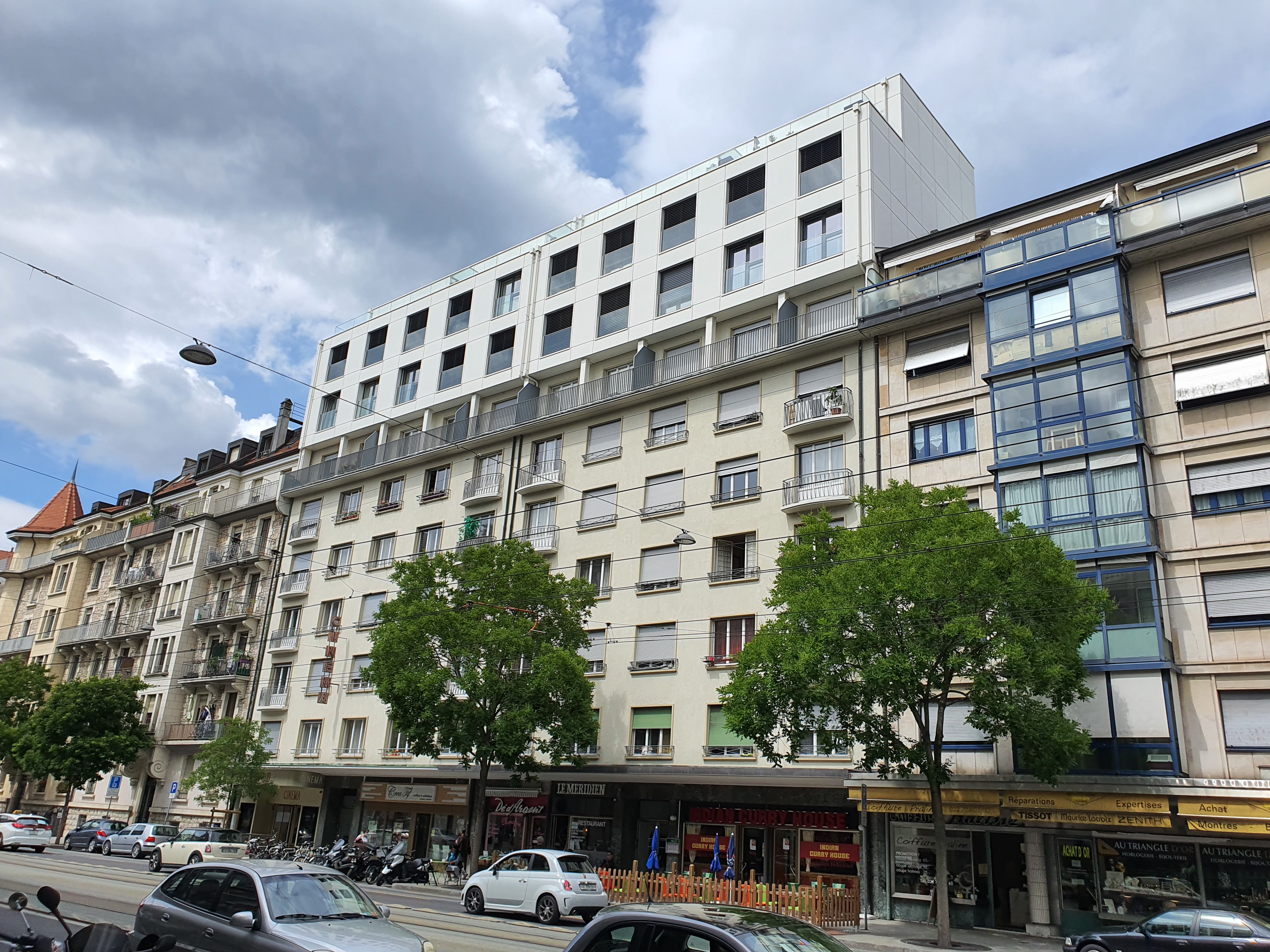


Frequently asked questions on coordinating contractors in Geneva
Does the architect who obtained the permit have to run the site?
No. You can give them the construction phase as well, or keep your architect for design and hand the site to a project management firm. HMG can take over the file after the permit, working with the architect.
Can I coordinate the tradespeople myself?
For small jobs, yes. As soon as several trades follow one another, someone has to keep the schedule, check each firm's work and control the invoices, which takes time and experience. That is exactly what a project manager is for.
Does a general contractor also coordinate the trades?
Yes, it coordinates its own subcontractors within its lump sum. The difference lies in where each party stands. A project manager represents the client in dealings with the contractors, whereas the general contractor is itself the contractor.
What happens to the conditions attached to the permit?
They are binding on site. HMG writes them into the tender documents and the schedule, so that each contractor knows what applies to them and nothing comes to light too late.
When should I contact a project management firm?
As early as you can, ideally before filing, so that the cost estimate and the schedule take the construction phase into account. A file whose permit has just been granted can also be taken over. You can reach HMG on +41 22 552 08 22, and the firm calls back within 24 hours.
Related guides and pages
Request a call back
Describe your project in a few lines. HMG calls you back within 24 hours.